Research and Report Consultancy

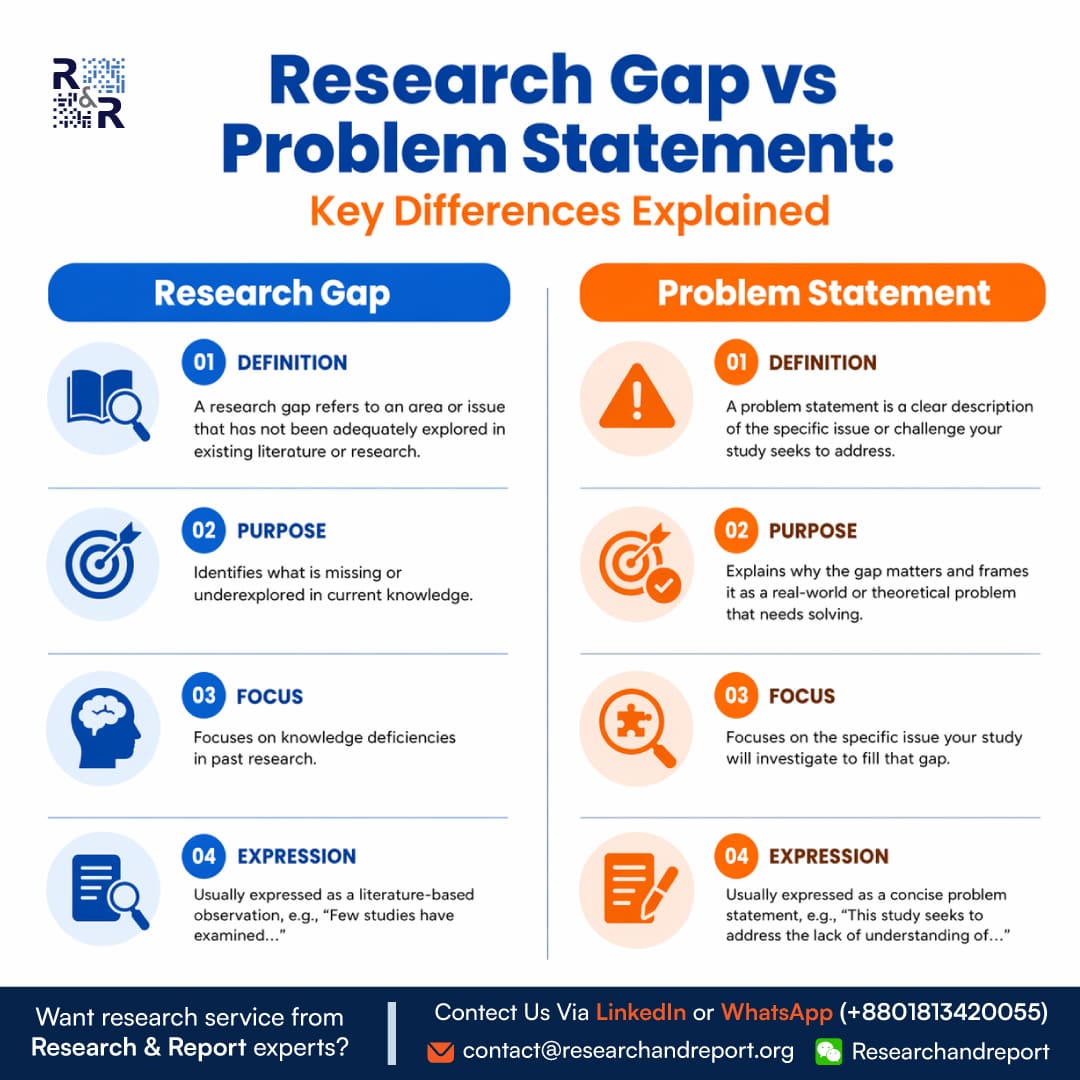
Research Gap vs Problem Statement: Key Differences Explained

Research-Gap-vs-Problem-Statement-Key-Differences-Explained

Every researcher faces two foundational tasks at the start of any study. They must identify what knowledge is missing. Then, they must explain why finding it matters. These two tasks produce two different outputs: the research gap and the problem statement. Yet, academic writing surveys consistently show that up to 67% of early-stage researchers confuse … Read more

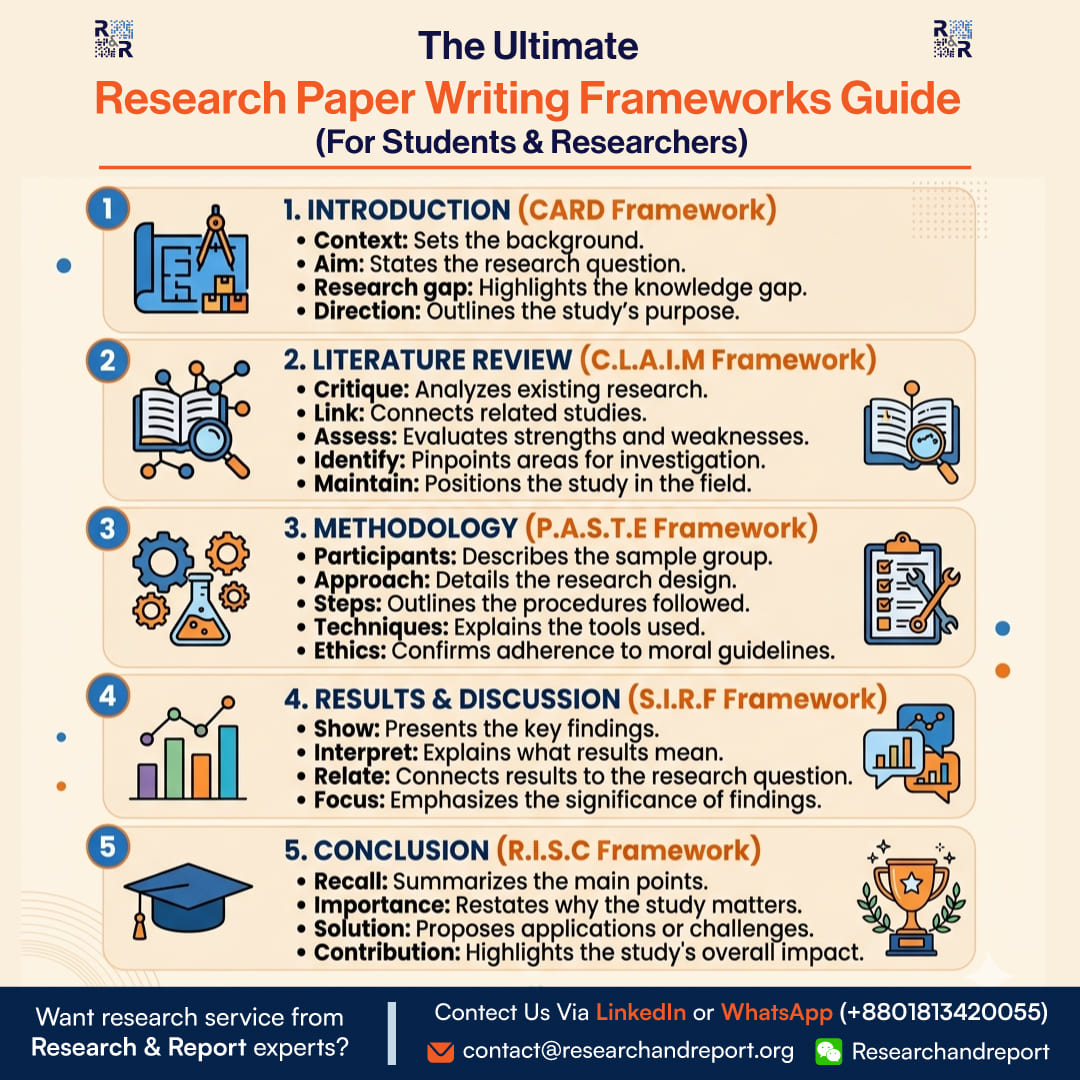
The Ultimate Research Paper Writing Frameworks Guide (For Students & Researchers)

The-ultimate-Research-Paper-Writing-Frameworks-Guide

Why Most Research Papers Fail Many researchers face rejection not because of weak ideas, but due to poor structure and clarity. Journals increasingly prioritize logical flow, reproducibility, and contribution clarity. According to studies in academic publishing, over 60% of rejected manuscripts fail due to structural and presentation issues, not research quality. A structured framework solves … Read more

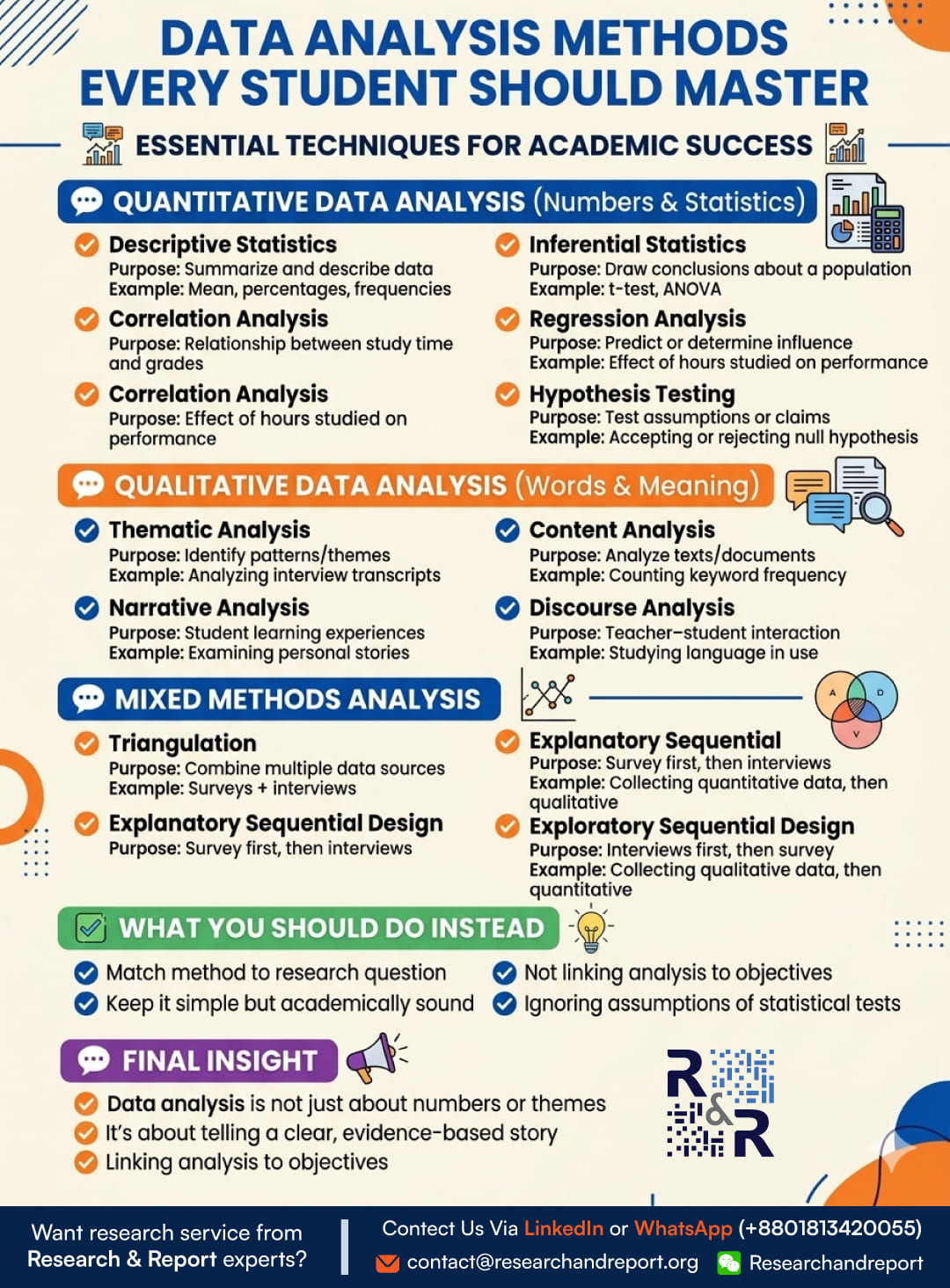
Data Analysis Methods Every Student Should Master

Data-analysis-methods for all students

Many research projects fail due to weak data analysis. Strong ideas alone are not enough. Your findings depend on how well you analyze data. Poor analysis leads to incorrect conclusions and rejection in journals. Therefore, mastering data analysis methods is not optional. It is a core research competency. Types of Data Analysis Methods Quantitative Data … Read more

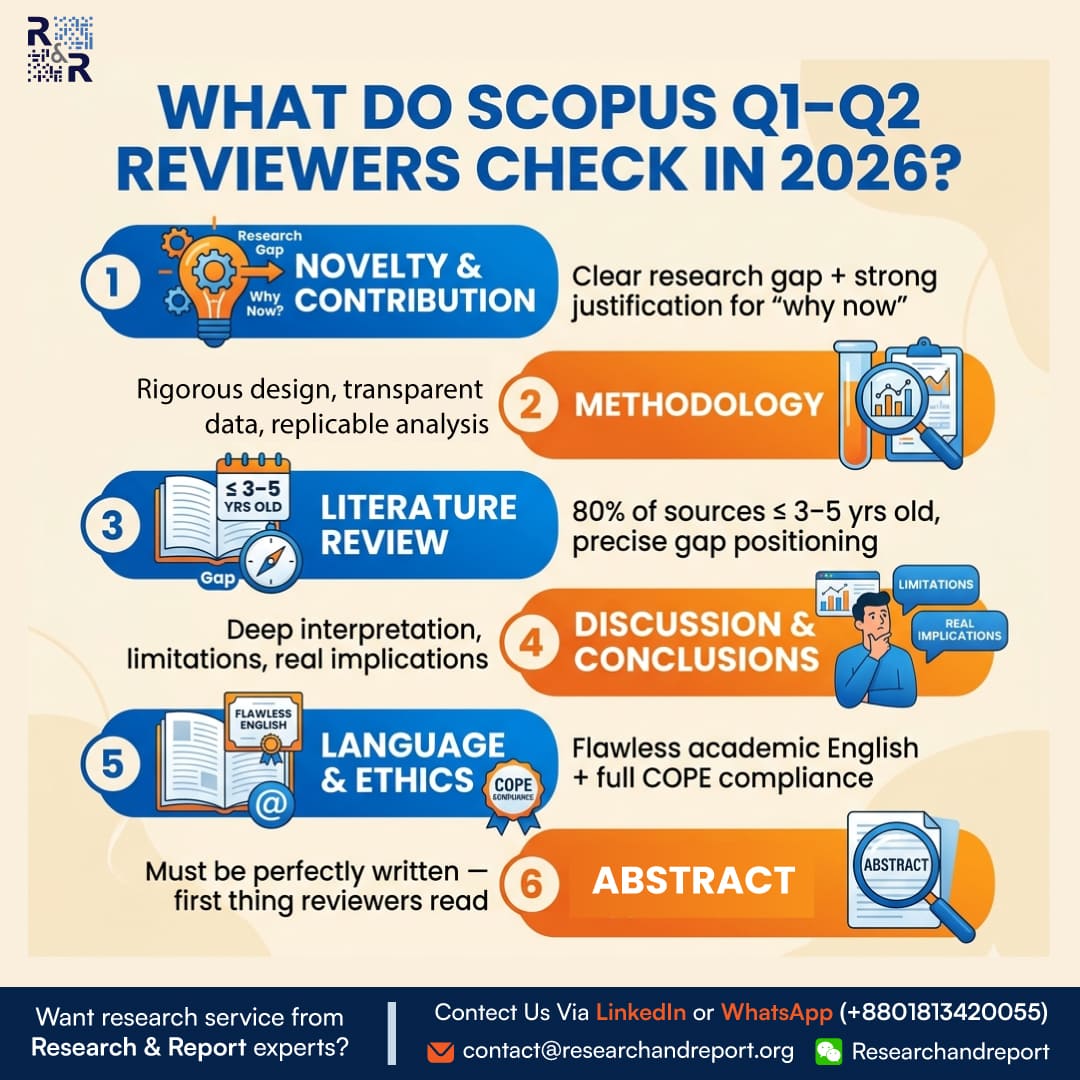
What Scopus Q1–Q2 Reviewers Check in 2026 (For Researchers)

What-do-Scopus-Q1-Q2-reviewers-check-in-2026

Publishing in Scopus Q1–Q2 journals is highly competitive. Acceptance rates often fall below 10%. Reviewers now focus on research impact, clarity, and reproducibility. Many researchers fail due to avoidable mistakes. This guide explains what reviewers actually check and how you can meet those expectations. 1. Novelty & Contribution — The #1 Rejection Factor What Reviewers … Read more

Manuscript Pre-Submission Checklist for Scopus Q1–Q2 Journals

Manuscript-pre-submission-checklist

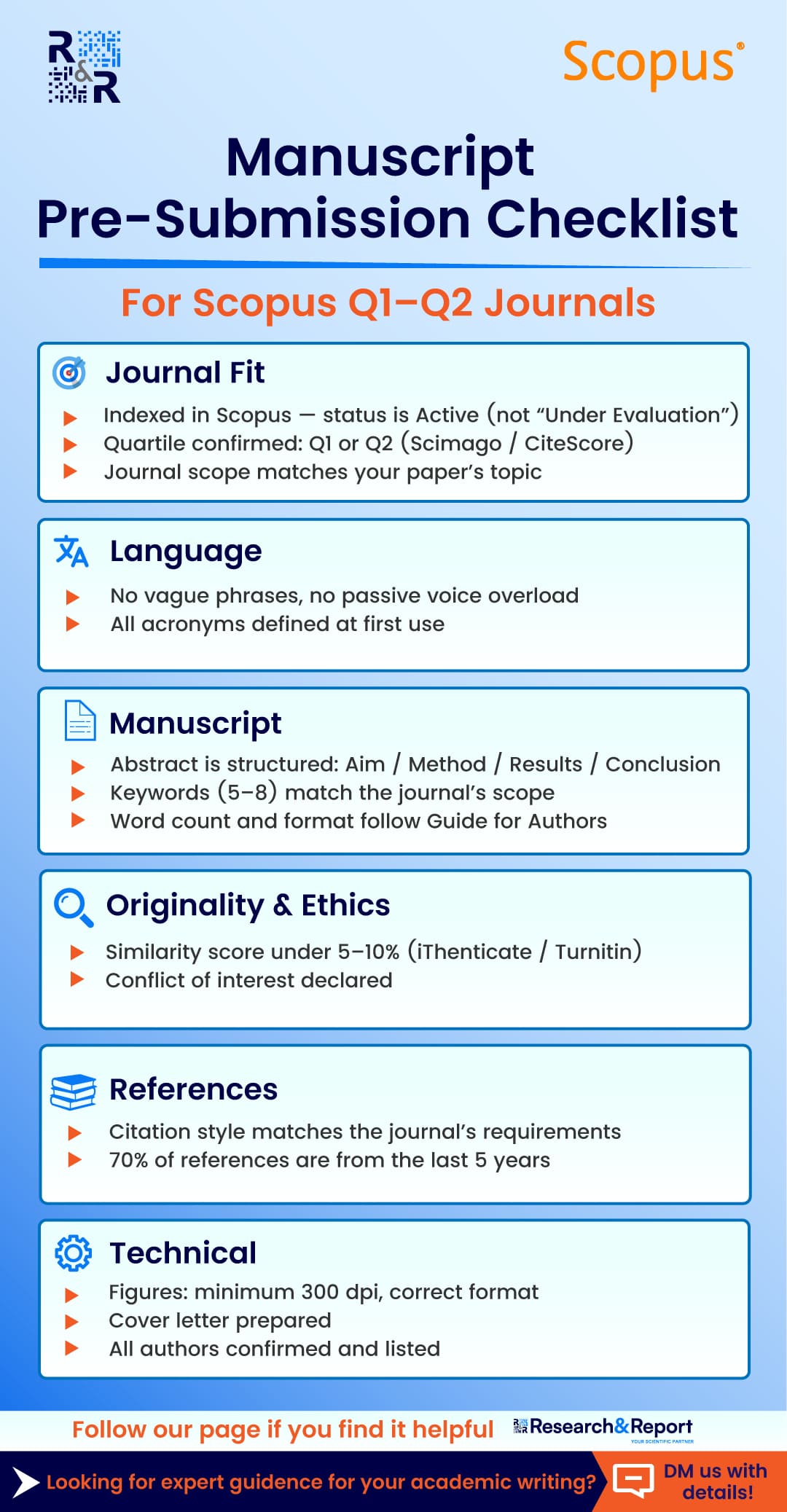
Publishing in Scopus-indexed Q1–Q2 journals is a benchmark of academic excellence. However, a significant number of manuscripts are rejected before peer review, not due to poor research quality, but because of avoidable submission errors. This comprehensive guide provides a step-by-step pre-submission checklist to help researchers maximize acceptance rates and ensure compliance with top-tier journal standards. … Read more

How to Select the Right Article Type for Scopus Q1–Q2 Journals

How to Choose the Right Article Type for Scopus Q1–Q2 Journals

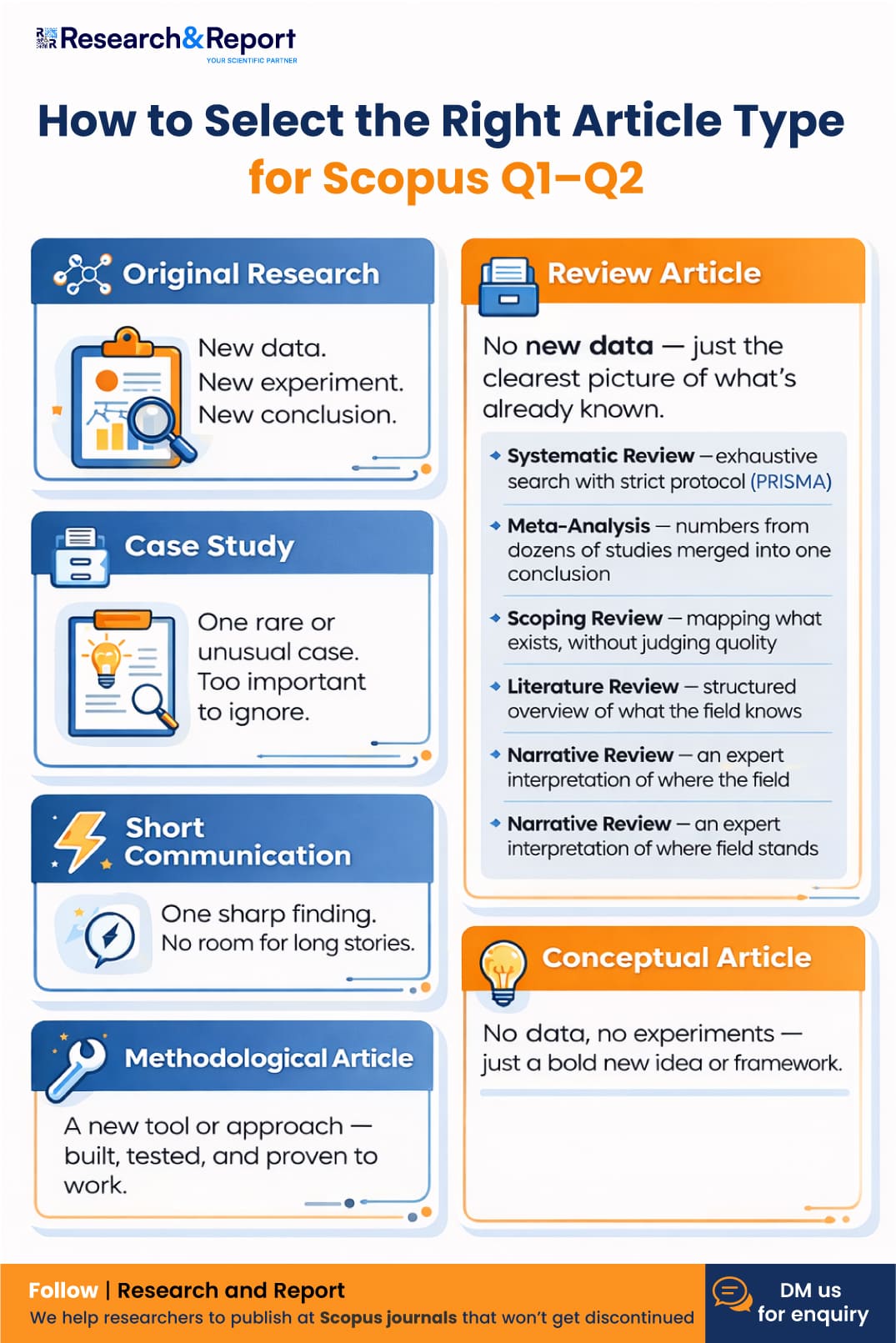
Publishing in Scopus Q1–Q2 journals is highly competitive. Many researchers assume rejection is due to weak research. In reality, a common reason is choosing the wrong article type. This is not a quality issue—it’s a strategic mismatch. In this guide, you’ll learn how to select the right article type to improve your chances of acceptance. … Read more

Free Premium Courses to Master Research Articles & AI in Peer Review

Free Premium Courses: Master Research Articles & AI in Peer Review

Why These Courses Matter Now Academic publishing is changing rapidly.Researchers face tighter quality checks, stricter ethics policies, and rising competition.At the same time, artificial intelligence is reshaping scholarly workflows. To support researchers globally, Wiley Researcher Academy offers free, premium-quality online courses.These courses focus on research article writing and AI in peer review.They are designed by … Read more

Why Convenience Sampling Fails Representativeness in Research

Why Convenience Sampling Fails Representativeness in Research

Many studies still confuse convenience sampling with representative sampling. The mistake looks small. But in peer review, it can quietly trigger rejection, credibility loss, and weak evidence claims. Convenience samples come from what is easy to reach. Online forms, single cities, single institutions, social media recruitment, and snowball sampling dominate modern research. These samples can … Read more

Misalignment Between Research Questions and Data Collected

Misalignment Between Research Questions and Data Collected

The Silent Rejection Trigger in Research Many researchers create great research questions (RQs), yet their data cannot answer them. Reviewers spot this quickly and often reject manuscripts for RQ–data misalignment because: These mismatches are subtle yet fatal. A well-aligned study defines the RQ, chooses the correct design, sets proper data needs, and only then asserts … Read more

Why Many Research Instruments Lack Face Validity—And How to Fix It

Why Many Research Instruments Fail Face Validity

Face validity is the most intuitive—and often the most ignored—dimension of measurement quality. If respondents cannot immediately understand what a question measures, the resulting data become fragile, regardless of high Cronbach’s alpha, AVE, or composite reliability. Poor face validity leads to misinterpretation, satisficing, social desirability distortions, and ultimately flawed statistical conclusions. In reality, many survey … Read more