Research and Report Consultancy

How Predatory Journals Trick Researchers: Guide to Avoid the Trap
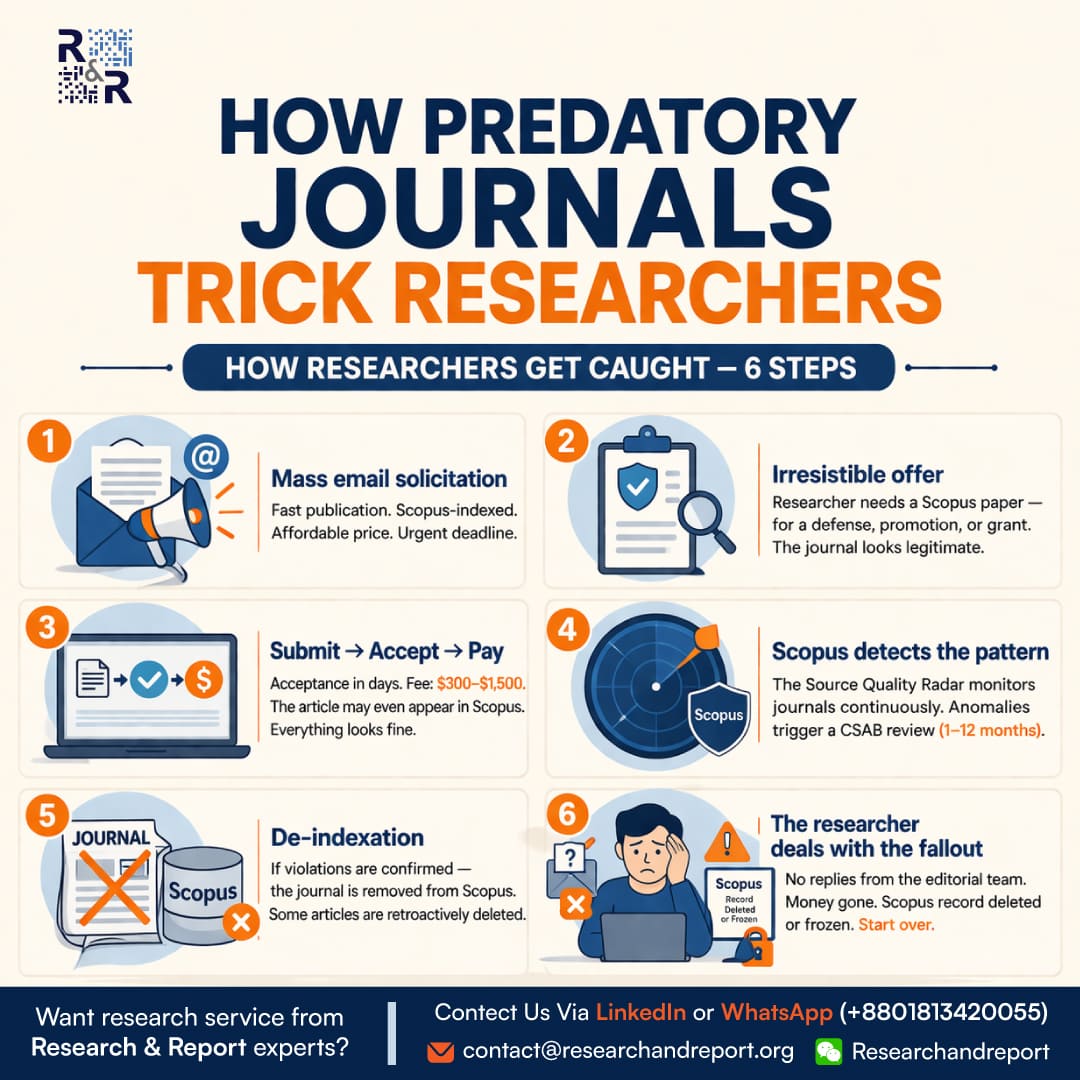
How-predatory-journals-trick-researchers

Predatory publishing is a growing threat in academic research. It impacts both early-career and experienced researchers. These journals use deceptive tactics to attract submissions. They exploit urgency, especially when researchers face deadlines for promotions, grants, or thesis defense. The danger is real. Many researchers lose money, credibility, and their publication records. How Predatory Journals Operate … Read more
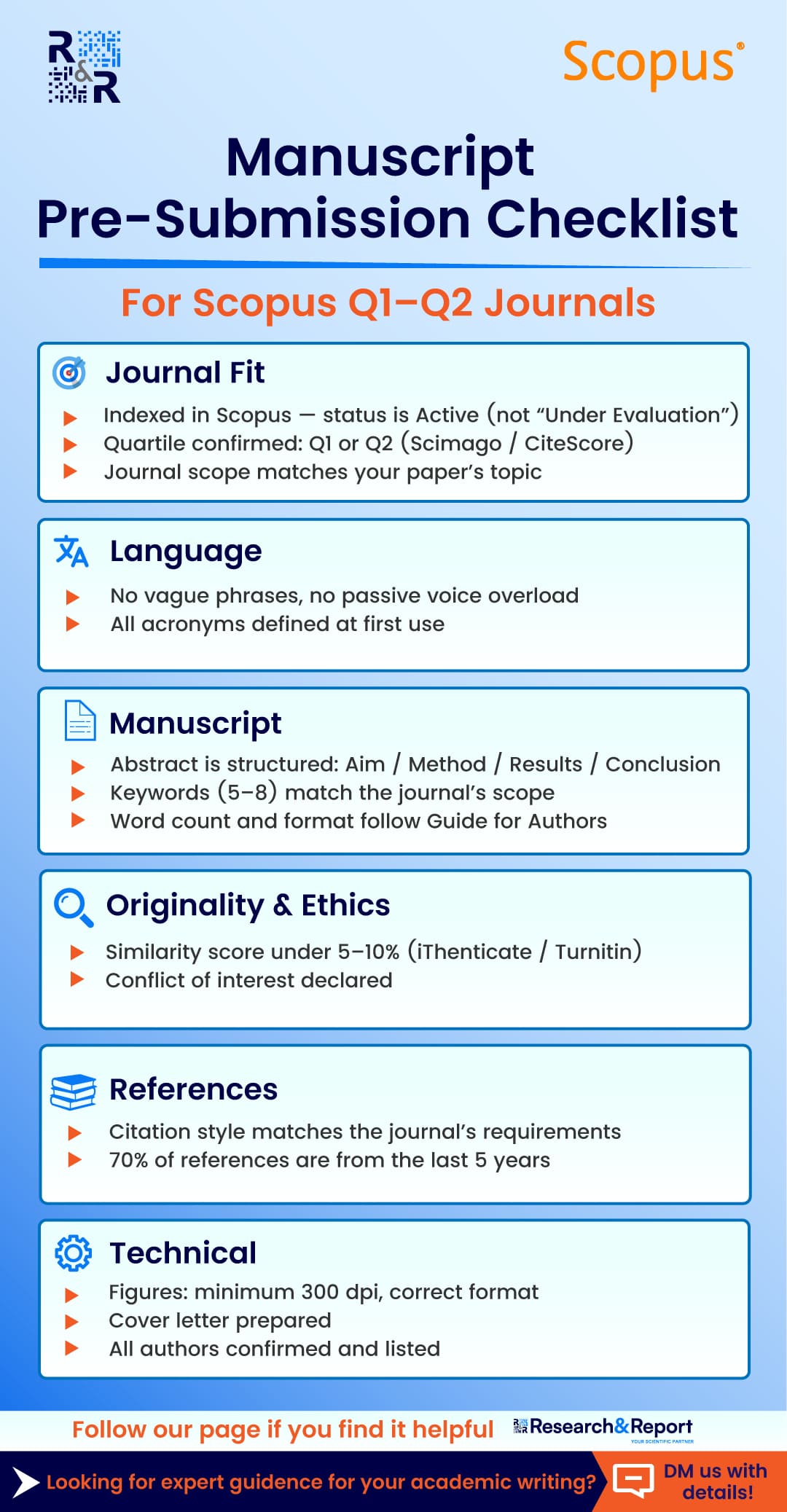
Manuscript Pre-Submission Checklist for Scopus Q1–Q2 Journals

Manuscript-pre-submission-checklist

Publishing in Scopus-indexed Q1–Q2 journals is a benchmark of academic excellence. However, a significant number of manuscripts are rejected before peer review, not due to poor research quality, but because of avoidable submission errors. This comprehensive guide provides a step-by-step pre-submission checklist to help researchers maximize acceptance rates and ensure compliance with top-tier journal standards. … Read more

Research Without Risk Assessment Is Operationally Vulnerable

Research Without Risk Assessment Is Operationally Vulnerable

Why Research Projects Fail Is Rarely About “Methods” Many research projects do not fail because the theory is weak or the methodology is wrong. They fail because the operational system behind the research breaks down. When risks remain invisible or unmanaged, even the strongest design collapses under real-world constraints. Studies from the NIH, WHO, and … Read more

Publication Pressure Breeds Risky Salami-Slicing

Publication Pressure Breeds Risky Salami-Slicing

Academic publishing is competitive. Researchers feel pressure to produce frequent outputs to secure promotions, funding, and prestige. This pressure often drives a risky shortcut known as salami-slicing—splitting one meaningful study into several “minimum publishable units.” It may appear productive, but journals increasingly see it as redundant publication and questionable ethics. The consequences are far greater … Read more

Ethical Risks of Using Public Secondary Data

Ethical Risks of Using Public Secondary Data

Many researchers assume public secondary datasets are automatically “safe” because they did not collect the data themselves. Journal reviewers, ethics boards, and leading publishers now disagree. Ethical blind spots in secondary data use increasingly trigger desk rejections, major revision demands, compliance investigations, and reputational damage. This guide explains the most overlooked ethical risks, why they … Read more

Why Ethical Approval Doesn’t Ensure Ethical Research

Why-ehtical-approval-does-not-ensure-ethical-research

Many researchers assume that once they receive an institutional review-board (IRB) or ethics committee approval, their ethical obligations are fully met. This assumption is risky and can lead to major integrity gaps in research. Ethical clearance is not a full guarantee of ethical conduct: it is only the starting line. The real ethical work takes … Read more