
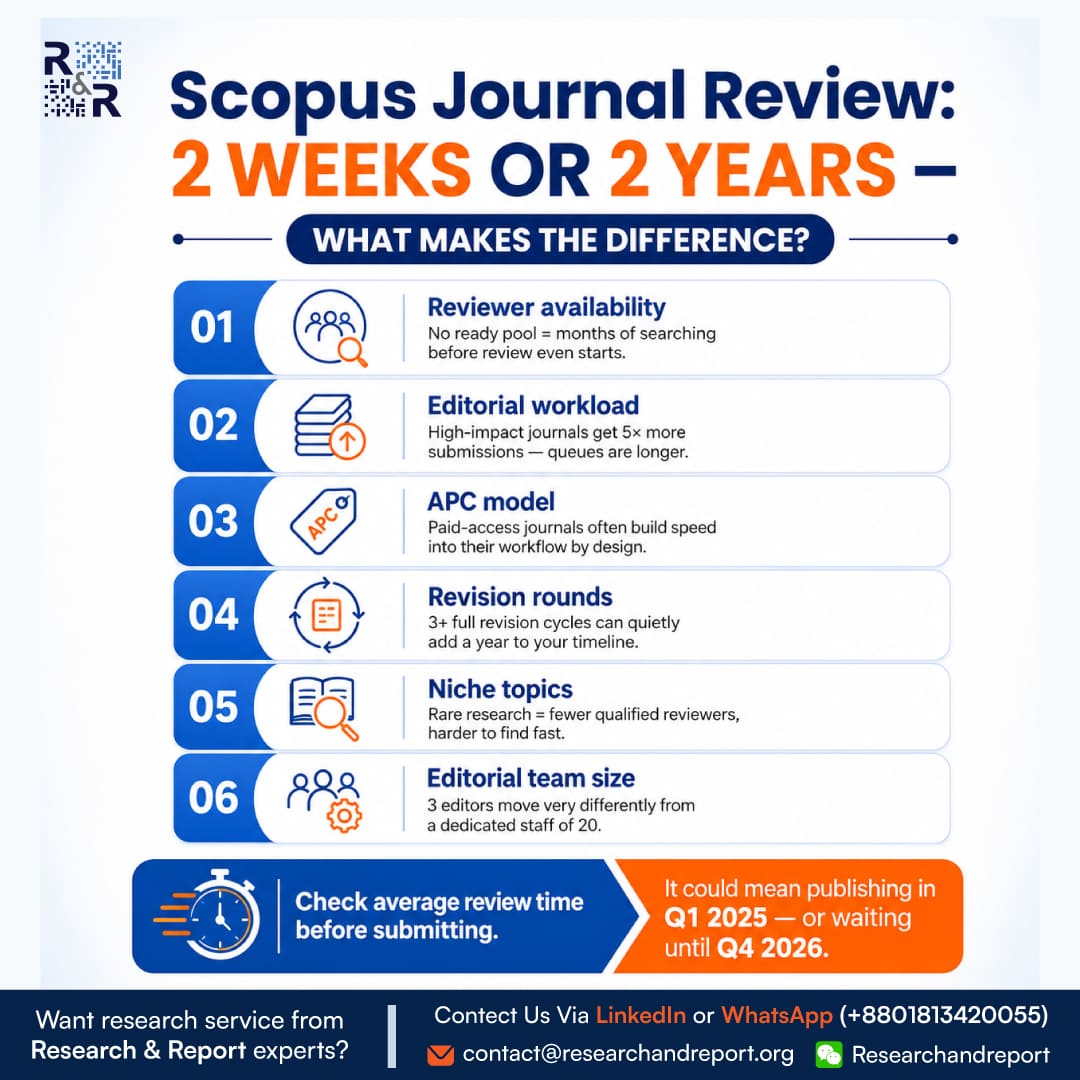
Most researchers choose a journal based on one metric — the impact factor. That single mistake costs many of them one to two years of waiting.
Review timelines across Scopus-indexed journals vary dramatically. One journal confirms a decision in 14 days. Another takes 730. Both are peer-reviewed. Both are Scopus-indexed. The difference is not prestige — it is process.
This guide breaks down six scientifically documented factors that directly control how long your paper waits. More importantly, it tells you what to check before you click “submit.”
Why Do Scopus Journal Review Times Vary So Widely?
The peer review system is not standardized. Every journal operates its own editorial workflow. According to a 2023 analysis by Taylor & Francis, median time from submission to first decision ranges from 33 days to over 400 days — within the same publisher’s portfolio.
The variation is not random. It is structural. Six documented factors account for most of the difference.
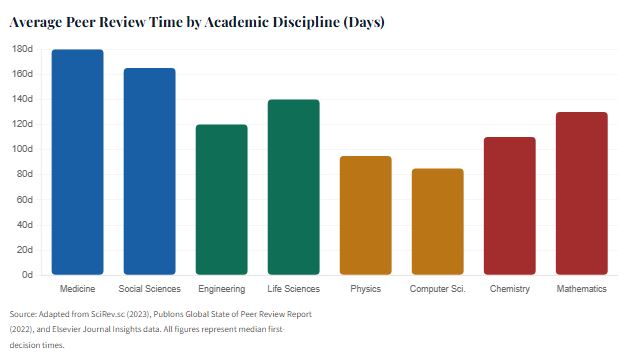
The 6 Critical Factors That Control Your Review Timeline
Most researchers discover these factors only after waiting. Here they are — ranked by impact on timeline.
Factor 01
Reviewer Pool Depth
Journals with pre-vetted, active reviewer databases assign papers within days. Journals that recruit reviewers per submission spend weeks before review even starts. Declining invitations average 50% across disciplines.
High impact on timeline
Factor 02
Editorial Workload & Submission Volume
High-impact journals receive 5× more submissions. Their editorial teams rarely scale proportionally. Nature receives ~60,000 submissions per year and publishes ~8%. Your paper competes for limited editorial attention.
5× submission volume gap
Factor 03
APC Funding Model
Article Processing Charge (APC) journals — including most Gold Open Access titles — have financial incentive to process papers quickly. Subscription journals have no revenue pressure tied to speed.
APC journals ~30% faster
Factor 04
Number of Revision Rounds
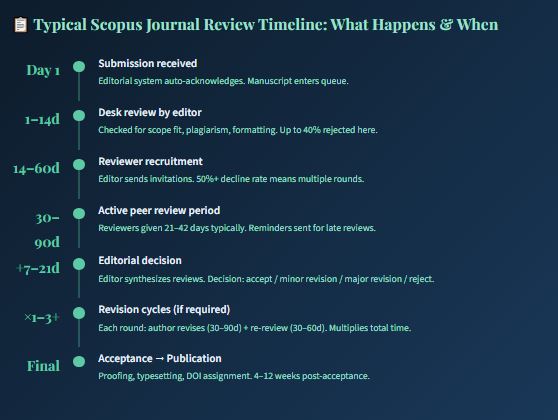
Each full revision cycle adds 3 to 6 months. Journals requiring 3+ rounds routinely take 18–24 months. Some disciplines — medicine, law, social sciences — average more revision cycles than STEM fields.
3–6 months per round
Factor 05
Research Topic Niche
Specialized research has a small global reviewer pool. Editors face repeated declines. A quantum computing cryptography paper may have fewer than 50 fully qualified reviewers globally — and most are competing authors.
Critical for niche fields
Factor 06
Editorial Team Infrastructure
A 3-person editorial team handles desk rejection, reviewer matching, decision letters, and author communication. A 20-person team parallelizes these tasks. Team size directly correlates with turnaround speed.
Team size = throughput
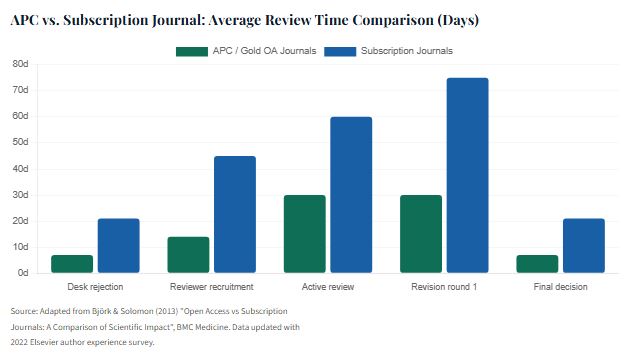
Deep Dive: What the Data Actually Shows
Reviewer Availability Is the Biggest Hidden Bottleneck
A 2022 Publons report found that reviewer invitation decline rates average 50–60% across major disciplines. For every invitation accepted, editors send two or more that are rejected.
This creates a cascading delay. A journal targeting three reviewers may send nine to twelve invitations before securing them. Each invitation cycle takes 7–14 days. Before a single expert reads your work, weeks or months may pass.
Expert Tip
Check if the journal uses reviewer recognition programs (e.g., Publons integration). These journals maintain more engaged reviewer pools and show measurably faster first-decision times.
High-Impact Journals: Prestige vs. Speed Trade-Off
Nature, Science, and Cell collectively received over 100,000 submissions in 2022. Their acceptance rates sit below 8%. This means more than 92,000 papers require desk rejection or full review — all competing for scarce editorial time.
The prestige–speed trade-off is real. A Q1 journal in your field may take 300 days. A Q2 journal in the same field may take 60 days. The difference rarely affects long-term citation impact as much as researchers assume.
Critical insight: A paper published quickly in a Q2 journal often accumulates more citations than the same paper published 18 months later in a Q1 journal. Speed of publication matters for field influence.
The APC Model Changes Editor Incentives
Open Access publishers including MDPI, Frontiers, and Hindawi openly publish their average review timelines — often 30–60 days. These journals have revenue tied to acceptance volume and speed. While this model draws criticism for quality concerns, their processing speed is documented and consistent.
Subscription journals — including many prestigious society journals — process papers on academic time. There is no financial urgency. Editors are often unpaid volunteers. The model is structurally slower.
How to Check a Journal’s Review Time Before Submitting
This step takes ten minutes. Most researchers skip it. Do not skip it.
- Visit Scimago Journal Rank (SJR) — search your target journal and check quartile, H-index, and publication volume trends
- Use SciRev.sc — a crowd-sourced database of actual author-reported review timelines by journal
- Check JournalGuide.com — aggregates review speed data and journal metrics
- Search the journal name + “average review time” on Google Scholar to find author experience posts
- Review the journal’s own “About” or “For Authors” page — many now publish average first-decision times
- Check Elsevier Journal Insights if the journal is Elsevier-published
- Look at recent papers in the journal — check submission date vs. acceptance date in the article header
💡 Power Move
On SciRev, filter by “time to first decision” and sort ascending. You can identify fast-turnaround, high-quality journals in your field in under 5 minutes. This one habit changes your publication strategy permanently.
References
- Publons (2022). Global State of Peer Review Report. Clarivate Analytics. publons.com/blog/the-global-state-of-peer-review/
- Björk, B. & Solomon, D. (2013). Open access versus subscription journals: a comparison of scientific impact. BMC Medicine, 11(1). bmcmedicine.biomedcentral.com
- Taylor & Francis (2023). Author Insights Survey: Peer Review Timelines. authorservices.taylorandfrancis.com
- Elsevier (2023). Journal Insights: Editorial Performance Data. elsevier.com/researcher/author
- SciRev.sc (2023). Crowd-sourced journal review time database. scirev.org
- Nature (2023). About the journal: submission statistics. nature.com/nature/about
- Scimago Journal & Country Rank (2023). Journal Rankings. scimagojr.com
- JournalGuide (2023). Find the right journal for your research. journalguide.com
- MDPI (2023). Average processing time statistics. mdpi.com
- Huisman, J. & Smits, J. (2017). Duration and quality of the peer review process. Scientometrics, 113(1). link.springer.com
💬 Over to you:
What is the longest you have ever waited for a peer review decision — and which journal was it? Did the wait affect where you submitted next? Share your experience in the comments below. Your story helps other researchers make smarter submission decisions. 👇
Want research service from Research & Report experts? Please get in touch with us.