
Why Citation Count Matters
Publishing a research paper is only the first step. The real impact of research emerges when other scholars read, discuss, and cite your work.
Citations are one of the most important indicators of academic influence. Universities, funding agencies, and ranking bodies often evaluate researchers based on citation metrics. A highly cited paper demonstrates relevance, visibility, and contribution to the scientific community.
According to Google Scholar, Scopus, and Web of Science, papers that are actively promoted and widely discoverable generally receive more citations than equally valuable but less visible research.
The good news is that citation growth does not stop after publication. Researchers can take several ethical and effective actions to increase visibility and maximize academic impact.
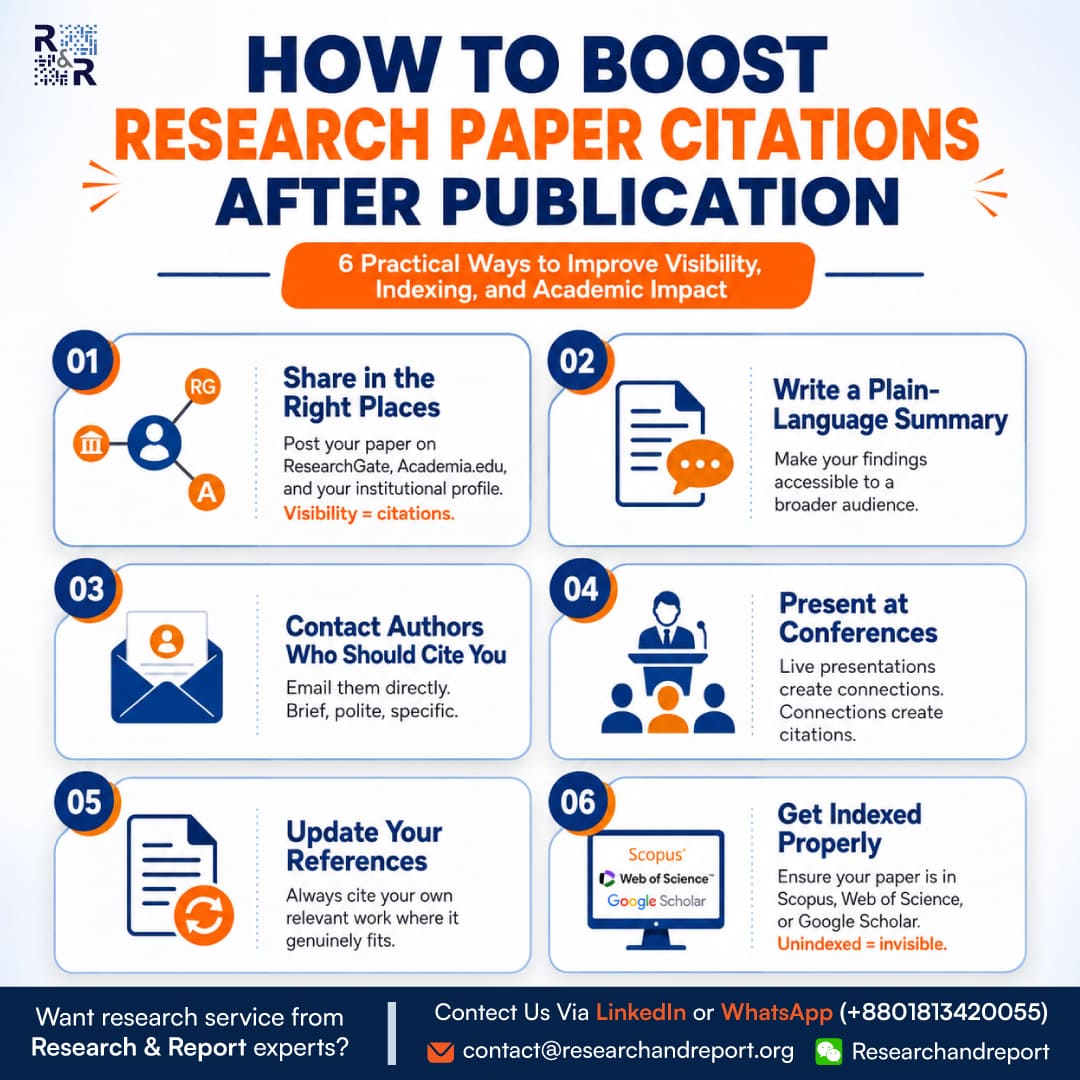
1. Share Your Research in the Right Places
Visibility drives citations.
Many researchers publish a paper and wait for citations to arrive naturally. However, proactive dissemination can dramatically improve discoverability.
Share your article through:
- ResearchGate
- Academia.edu
- ORCID profile
- Institutional repository
- University faculty page
- Personal academic website
- Google Scholar profile
When researchers search for literature, these platforms often appear in search results.
Best Practices
- Upload accepted manuscripts where publisher policies allow.
- Add complete metadata.
- Include DOI links.
- Update profile descriptions regularly.
The easier your paper is to find, the more likely it is to be cited.
2. Write a Plain-Language Summary
Research often contains technical terminology that limits audience reach.
A plain-language summary translates complex findings into clear, accessible language.
Benefits include:
- Increased readership
- More social sharing
- Better media coverage
- Greater interdisciplinary engagement
Researchers from other fields may discover your work through these summaries.
Where to Publish Summaries
- LinkedIn articles
- University blogs
- ResearchGate updates
- Department newsletters
- Medium publications
Keep summaries under 500 words and focus on practical implications.
3. Connect with Researchers Who May Benefit from Your Work
Networking remains one of the most effective academic marketing strategies.
If your paper directly supports another researcher’s work, consider sending a professional email.
Effective Outreach Tips
- Keep emails concise.
- Personalize each message.
- Explain relevance clearly.
- Include DOI and article link.
Avoid requesting citations directly.
Instead, introduce your findings and explain why they may be useful.
This approach builds professional relationships and increases awareness.
4. Present Your Findings at Conferences
Conference presentations create visibility beyond journal publication.
Researchers often cite papers they encounter during:
- Academic conferences
- Workshops
- Seminars
- Research symposiums
- Industry events
Presenting your research allows you to:
- Explain methodology
- Answer questions
- Build collaborations
- Increase recognition
Face-to-face interactions often lead to future citations and collaborative publications.
Conference Optimization Tips
- Include QR codes linking to your paper.
- Share presentation slides online.
- Upload posters to research repositories.
- Promote sessions on social media.
5. Cite Your Relevant Previous Research
Ethical self-citation is an accepted academic practice.
If your previous studies provide context or supporting evidence, cite them appropriately.
Benefits include:
- Strengthening research continuity
- Improving literature connections
- Helping readers understand research progression
However, excessive self-citation can be viewed negatively.
Only cite previous work when it genuinely contributes to the discussion.
Quality matters more than quantity.
6. Ensure Proper Indexing and Discoverability
Even excellent research receives few citations if it remains difficult to find.
Proper indexing is essential.
Verify that your paper appears in:
- Google Scholar
- Scopus
- Web of Science
- Dimensions
- Crossref
- OpenAlex
Why Indexing Matters
Indexed papers benefit from:
- Better search visibility
- Increased discoverability
- Citation tracking
- Academic analytics
Researchers frequently use database searches when conducting literature reviews.
If your paper is absent from major indexes, potential citations may be lost.
Additional Strategies to Increase Citations
Optimize Your Research Title
Strong titles improve click-through rates.
Include:
- Relevant keywords
- Clear topic descriptions
- Specific outcomes
Avoid vague titles.
Use Academic Social Media
Platforms such as LinkedIn and X (formerly Twitter) help researchers expand visibility.
Share:
- Key findings
- Infographics
- Visual abstracts
- Conference updates
Consistent promotion keeps research visible.
Create Visual Content
Visual content often receives higher engagement than text-only posts.
Useful formats include:
- Infographics
- Research posters
- Citation guides
- Visual abstracts
- Data visualizations
These assets improve knowledge sharing and audience retention.
Sources of Citation Growth
| Activity | Potential Impact |
| Repository Sharing | High |
| Conference Presentations | High |
| Research Networking | High |
| Plain-Language Summaries | Medium |
| Academic Social Media | Medium |
| Ethical Self-Citation | Medium |
| Proper Indexing | Very High |
Key Takeaways
Increasing citations requires more than publishing quality research.
Researchers should focus on:
a. Visibility
b. Accessibility
c. Networking
d. Discoverability
e. Indexing
f. Strategic promotion
When combined, these practices create a sustainable citation growth strategy.
The most successful researchers actively promote their work long after publication.
References
- Google Scholar – https://scholar.google.com
- Scopus – https://www.scopus.com
- Web of Science – https://www.webofscience.com
- ORCID – https://orcid.org
- ResearchGate – https://www.researchgate.net
- Academia.edu – https://www.academia.edu
- Crossref – https://www.crossref.org
- OpenAlex – https://openalex.org
- Elsevier Researcher Academy – https://researcheracademy.elsevier.com
- Clarivate Research Resources – https://clarivate.com
Final Thoughts
Publishing a paper is only the beginning of the research journey.
Which of these citation-boosting strategies has worked best for you, and what additional methods would you recommend to fellow researchers?
Want research service from Research & Report experts? Please get in touch with us.