Research and Report Consultancy

Why p < 0.05 Doesn’t Mean Scientific Truth

Why p is less than 0.05 Doesn’t Mean Scientific Truth

In the world of research, the marker p < 0.05 has become almost shorthand for “we found something meaningful”. Yet, it is not sufficient on its own. As a professional in research & report consulting, we see many studies relying solely on p-values — ignoring what actually matters: effect sizes, confidence intervals, data quality, and … Read more

Open Access Traps: Detect Predatory Publishing

Open-access-traps-detect-predatory-publishing

Open Access (OA) publishing has accelerated global knowledge-sharing and reduced barriers to scientific dissemination. However, this growth has also led to an alarming rise in predatory journals—deceptive outlets designed to extract revenue from authors while providing little scholarly value. These journals imitate legitimate OA platforms and frequently target early-career researchers who lack training in publication … Read more

How the Unit of Analysis Can Ruin Your Research

How-unit-of-analysis-can-ruin-your-research

Most research failures start long before data analysis. They begin at the design stage, when researchers misidentify the unit of analysis. This single mistake produces misleading results, faulty comparisons, and policy recommendations that collapse when applied in real-world settings. For research, evaluation, and policy studies, choosing the wrong unit of analysis is one of the … Read more

The Fallacy of Measurement Without Conceptual Clarity

The-Fallacy-of-measurement-without-conceptual-clarity

In research and consulting practice, we often observe a common yet critical error: using measurement scales before ensuring the concept is fully defined. At Research & Report Consulting, we witness it time and time again — and the consequences are serious: data that misleads, reports that misinform, and decisions that rest on sand. Why It … Read more

Why Journal Impact Factor Isn’t Enough

Why journal factor is not enough

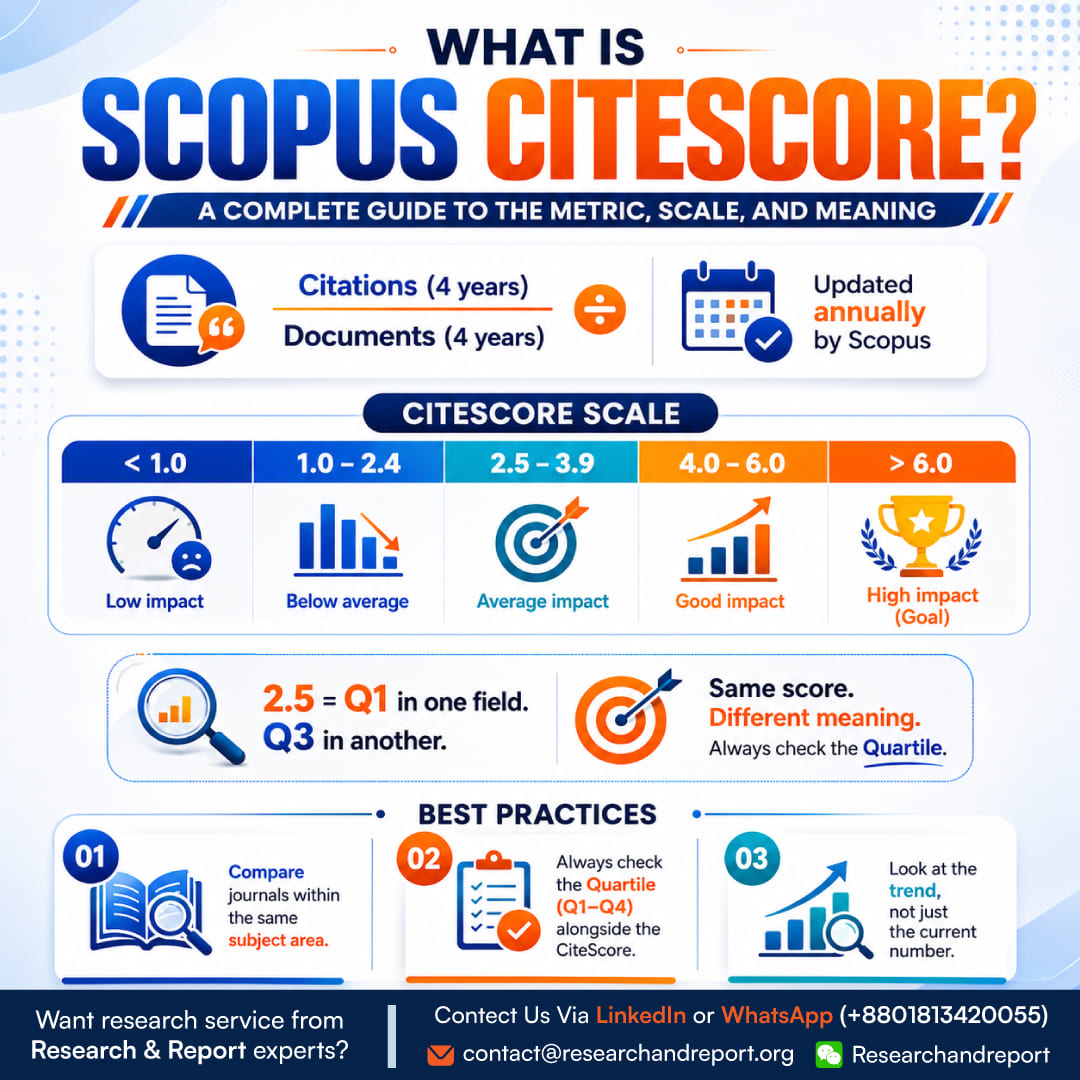
Many researchers still treat Journal Impact Factor (IF) as the ultimate indicator of journal quality. However, relying solely on this metric leads to misinformed decisions, wasted submission cycles, and a disconnect between research goals and journal expectations. Modern publishing ecosystems demand a more strategic and evidence-driven evaluation method. This article explains why IF is no … Read more

The Missing Variable in Research: Context

The-missing-variable-in-research-context

Why Context Defines Research Quality In academic and applied research, data is often treated as objective truth. Yet, every dataset is shaped by the context in which it is produced—culture, geography, politics, and time. Ignoring context doesn’t just weaken results; it distorts reality. When researchers transfer models from the Global North to the Global South … Read more

Why Translated Instruments Fail Without Localization

Why-translated-instruments-fail-without-localization

Understanding the Problem: Translation Isn’t Enough In global research, translation is often mistaken for localization. Many researchers assume that once a questionnaire or scale is linguistically translated, it becomes universally applicable.However, translation alone rarely guarantees conceptual equivalence—the idea that a question measures the same construct in another language or culture. For example, a “satisfaction survey” … Read more

Triangulation Isn’t Just About Using Three Methods

Triangulation-is-not-just-about-using-three-methods

Understanding the Real Meaning of Triangulation In academic and applied research, triangulation is often misunderstood. Many believe it simply means using “three methods” to collect data. However, triangulation is not about the number three—it’s about cross-verifying evidence from multiple sources or perspectives to improve the credibility, reliability, and depth of research findings. This approach prevents … Read more

Why Simpler Models Outperform Overfitted Ones

Why-simpler-models-outperform-overfitted-ones

In data analysis and research, complexity is often mistaken for sophistication. Many assume that the more variables or equations a model has, the stronger it becomes. However, the reality is quite the opposite — simpler models often perform better than overly complex, overfitted ones. Let’s explore why simplicity often wins, both statistically and practically. What … Read more

How to Write a Critical Literature Review

How-to-write-a-critical-literature-review

Many researchers believe that a literature review is simply a summary of past work. But this mindset leads to shallow output and missed opportunities. At Research & Report Consulting, we help clients transform their literature reviews into strategic foundations for originality and impact. Below we will walk you through the critical issues many researchers miss, … Read more