
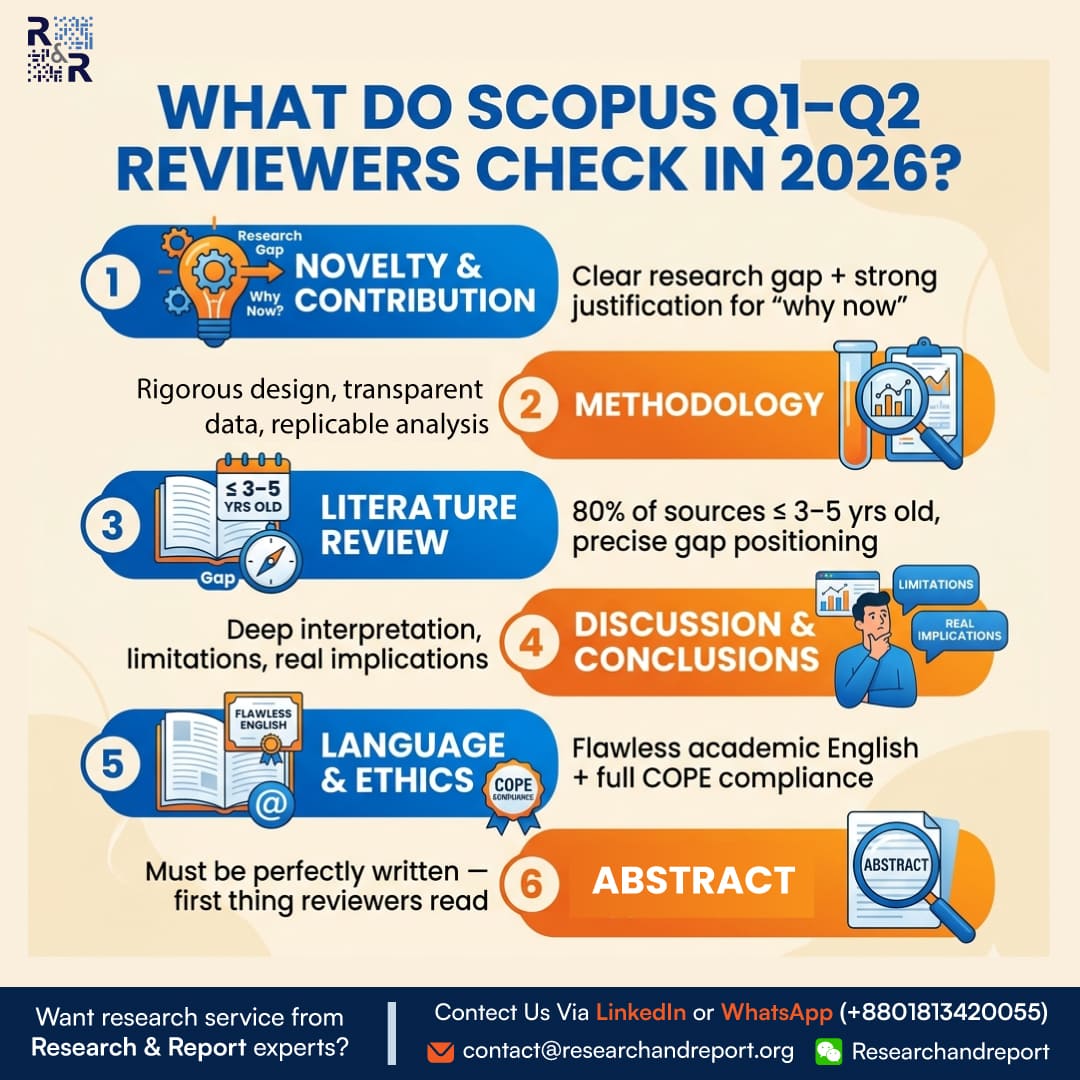
Publishing in Scopus Q1–Q2 journals is highly competitive. Acceptance rates often fall below 10%. Reviewers now focus on research impact, clarity, and reproducibility.
Many researchers fail due to avoidable mistakes. This guide explains what reviewers actually check and how you can meet those expectations.
1. Novelty & Contribution — The #1 Rejection Factor
What Reviewers Expect
- A clear research gap
- Strong justification of relevance
- Evidence of originality
Common Mistakes
- Repeating existing studies
- Weak problem statements
- No “why now” explanation
Pro Tip
Use tools like:
- Scopus database
- Google Scholar trends
Focus on emerging research gaps.
2. Methodology — Your Paper’s Foundation
What Reviewers Check
- Research design validity
- Data transparency
- Replicability
Key Elements
- Sample size justification
- Statistical robustness
- Clear procedures
3. Literature Review — Strategic Positioning
Reviewer Expectations
- 80% references from last 3–5 years
- High-impact journal citations
- Clear research gap positioning
Avoid This
- Listing studies without analysis
- Using outdated references
Best Practice
Use systematic review frameworks like:
- PRISMA
- Scoping review models
4. Discussion & Conclusions — Where Papers Fail
Critical Requirements
- Deep interpretation
- Comparison with prior studies
- Practical implications
Structure
- Explain findings
- Address limitations
- Suggest future research
5. Language & Ethics — Zero Tolerance Zone
What Reviewers Demand
- Clear academic English
- Logical flow
- Ethical compliance
Ethics Checklist
- No plagiarism
- Proper citations
- COPE compliance
- Ethical approval (if required)
Fact
COPE guidelines are mandatory for most journals.
6. Abstract — The Make-or-Break Section
Why It Matters
Reviewers read the abstract first. It shapes their decision.
Ideal Structure
- Problem
- Method
- Results
- Contribution
Example Flow
Problem → Method → Key Result → Contribution
Key Takeaways
- Novelty drives acceptance
- Methodology ensures credibility
- Recent literature builds relevance
- Discussion shows impact
- Ethics protects integrity
- Abstract attracts reviewers
References
- Elsevier Journal Insights
- Springer Nature Author Guidelines
https://www.springernature.com/gp/authors - COPE Ethical Guidelines
https://publicationethics.org - Scopus Content Selection
https://www.scopus.com/sources - PRISMA Statement
http://www.prisma-statement.org
Want research service from Research & Report experts? Please get in touch with us.