
Why Indexing Matters More Than Ever
Academic publishing is evolving fast. Indexing is no longer static. It shifts constantly.
Many researchers assume acceptance equals success. That assumption is flawed.
Where you publish matters as much as what you publish.
Your promotion, funding, and recognition often depend on indexing databases like:
- SCIE (Science Citation Index Expanded)
- ESCI (Emerging Sources Citation Index)
- Scopus (Elsevier database)
Let’s break this down strategically.
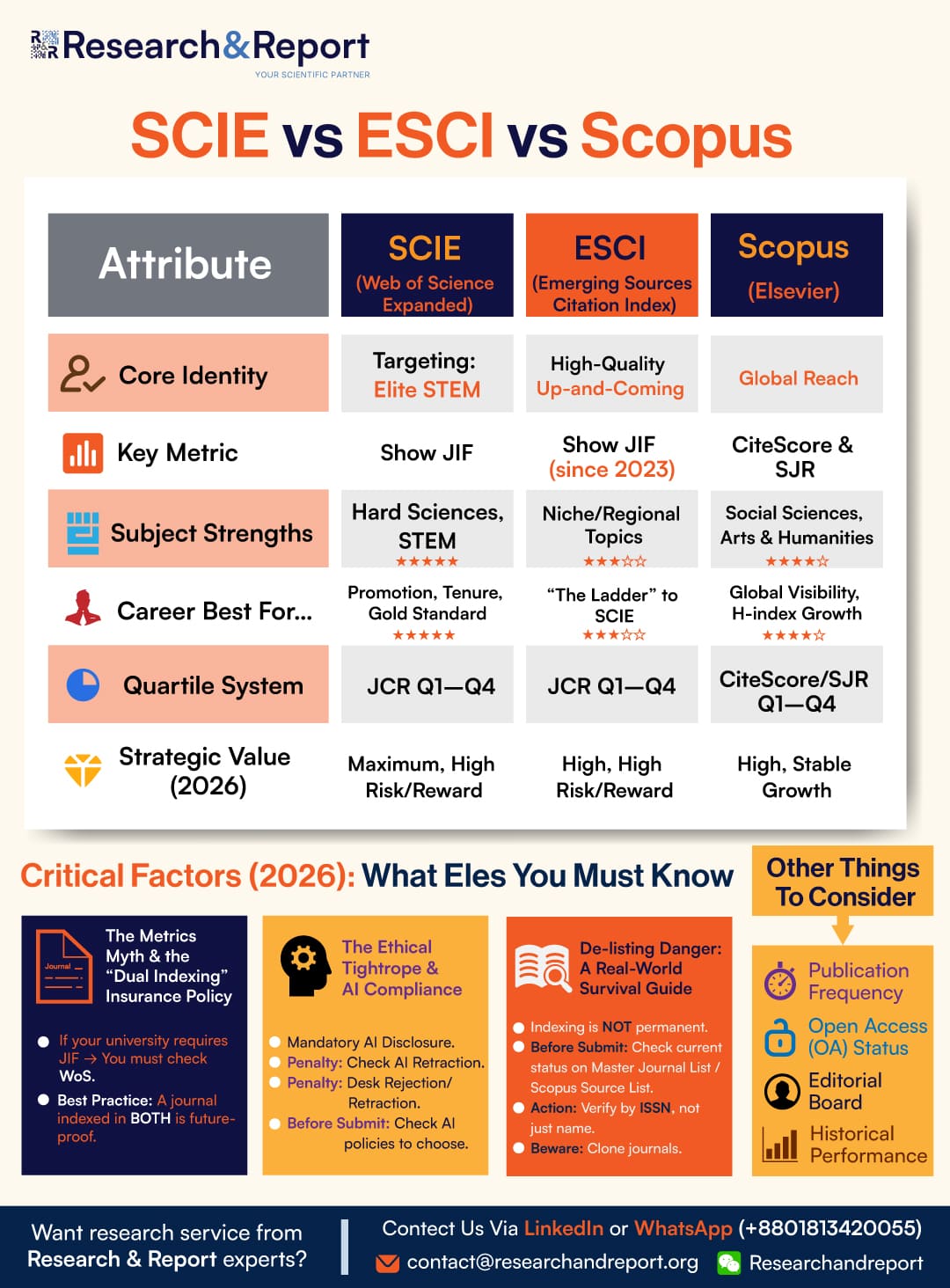
Understanding SCIE, ESCI, and Scopus
What is SCIE?
- Part of Web of Science Core Collection
- Includes high-impact journals
- Uses Journal Impact Factor (JIF)
- Preferred in STEM promotions
👉 Key Advantage: Strong academic credibility and recognition
What is ESCI?
- Entry-level Web of Science index
- Includes emerging, high-quality journals
- Now increasingly assigned JIF (since 2023)
👉 Key Advantage: Acts as a pathway to SCIE
What is Scopus?
- Largest abstract and citation database
- Uses CiteScore and SCImago Journal Rank (SJR)
- Covers multidisciplinary research
👉 Key Advantage: Global reach and citation growth
The Metric Reality (What Universities Actually Care About)
Different institutions prioritize different metrics:
- JIF-focused institutions
- Prefer SCIE or ESCI
- Common in STEM fields
- Citation-focused institutions
- Prefer Scopus
- Common in social sciences
👉 Insight: Always align your journal choice with institutional requirements.
Strategic Positioning for Researchers
When to Choose SCIE
- Applying for promotions
- Targeting elite grants
- Publishing in high-impact journals
When to Choose ESCI
- Early-career publishing
- Niche or regional research
- Building publication history
If You Choose Scopus
- Increasing visibility
- Interdisciplinary research
- Expanding global citations
2026 Survival Rules for Academic Publishing
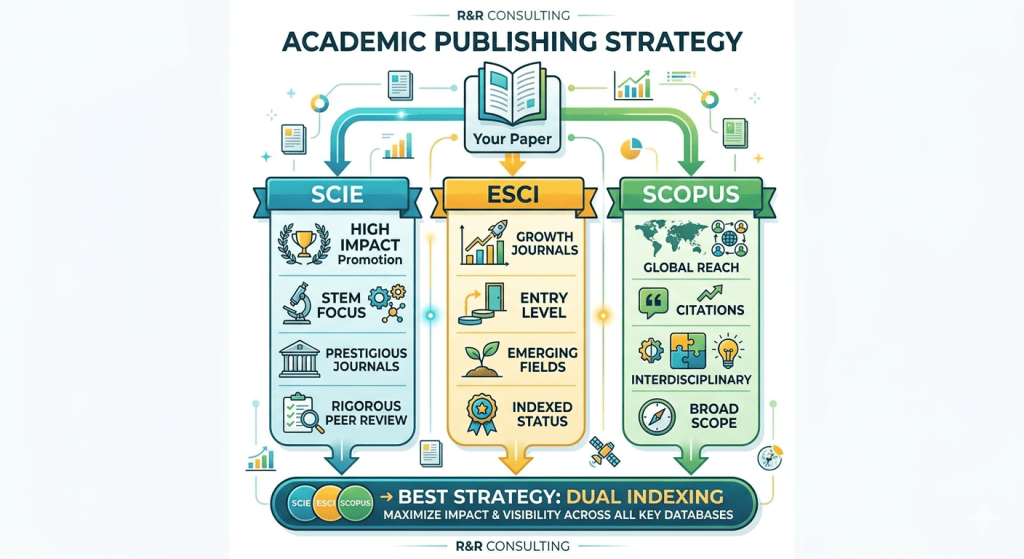
1. Dual Indexing Strategy
Target journals indexed in:
- Web of Science
- Scopus
✔️ This reduces risk and increases visibility
2. De-listing Risk is Real
Indexing can change anytime.
Never rely on journal websites alone.
✔️ Verify using:
- Web of Science Master Journal List
- Scopus Source List
✔️ Always check using ISSN
3. AI Transparency is Mandatory
Many journals now enforce AI policies.
Failure to disclose AI use may lead to:
- Desk rejection
- Retraction
✔️ Always review author guidelines before submission
Visual Comparison Chart
SCIE vs ESCI vs Scopus Overview
| Feature | SCIE | ESCI | Scopus |
|---|---|---|---|
| Impact Metric | JIF | JIF (since 2023) | CiteScore, SJR |
| Recognition | Very High | Growing | Global |
| Best For | STEM | Emerging Fields | Multidisciplinary |
| Risk Level | High | Moderate | Stable |
| Career Impact | Promotion-focused | Transitional | Visibility-focused |
Key Takeaways
- Indexing is dynamic, not permanent
- Metrics define career outcomes
- Dual indexing reduces risk
- Verification prevents predatory traps
- AI compliance is now essential
Conclusion
Publishing is not just about acceptance.
It is about strategic placement.
A single paper can lead to:
- Career advancement
- Missed opportunities
- Or global recognition
The difference lies in indexing.
Question
Which indexing database does your institution prioritize for promotion—and how does it influence your publishing strategy?
References
- Web of Science Master Journal List: https://mjl.clarivate.com
- Scopus Source List: https://www.scopus.com/sources
- Elsevier CiteScore Metrics: https://www.scopus.com/sources.uri
- Clarivate JIF Guide: https://clarivate.com
Want research service from Research & Report experts? Please get in touch with us.