
Cross-cultural research requires more than translation. Valid studies demand conceptual equivalence, measurement invariance, and contextual sensitivity to avoid distorted results.
Why Translation Is Only the First Step
Cross-cultural research is vital for understanding how social, political, and economic phenomena play out in different societies. Yet, one of the most common mistakes is assuming that translating a survey or interview guide is enough.
The truth: translation alone creates the illusion of comparability. Without cultural validation, measurement testing, and attention to context, data may mislead rather than inform. Translation ensures words cross borders; equivalence ensures meaning does.
Critical Issues Most Researchers Overlook
1. Conceptual Equivalence
A word may translate correctly, but the concept may not exist in the same way across cultures. For instance, “privacy” is central in Western societies but may feel irrelevant in collectivist settings. Similarly, “resilience” in some cultures emphasizes individual strength, while in others it reflects community survival.
Ignoring these cultural shifts leads to invalid comparisons that misrepresent lived experiences. Researchers must validate that constructs are meaningful within each cultural context before measurement begins.
2. Measurement Invariance
Statistical comparisons across groups require measurement invariance—ensuring that scales capture the same construct consistently. Without testing for configural, metric, and scalar invariance, differences across cultures may be artifacts of the measurement tool.
For example, a Likert scale on “job satisfaction” may capture attitudes differently in Germany (where workers value autonomy) compared to Japan (where harmony with colleagues dominates). Testing invariance protects against drawing false conclusions.
3. Response Bias
Cultures differ in how people respond to surveys. Some lean toward extreme ratings (“strongly agree/disagree”), while others prefer middle categories. Acquiescence bias (agreeing to please) and social desirability bias (giving socially acceptable answers) also vary widely.
If researchers fail to adjust for these differences, cultural response styles may distort the results, making apparent “differences” unreliable. Techniques like anchoring vignettes or balanced scales can reduce bias.
4. Contextual Sensitivity
Culture is not just language—it is shaped by history, norms, and power. For example, asking about “leadership” in Scandinavia may evoke egalitarian team coordination, while in hierarchical societies it may suggest authoritative decision-making.
Context shapes how questions are interpreted and how answers should be analyzed. Without contextual sensitivity, interpretations risk oversimplification or misrepresentation.
Why This Matters
Failing to go beyond translation has serious consequences:
- Invalid Comparisons – Apparent differences may be artifacts of measurement or bias.
- Policy Missteps – Misinterpreted findings can lead to ineffective policies and wasted resources.
- Loss of Credibility – Reviewers and journals increasingly require rigorous cross-cultural methods. Weak studies risk rejection or retraction.
Translation alone does not equal cultural validity. It hides distortions behind a false sense of comparability.
Chart Example
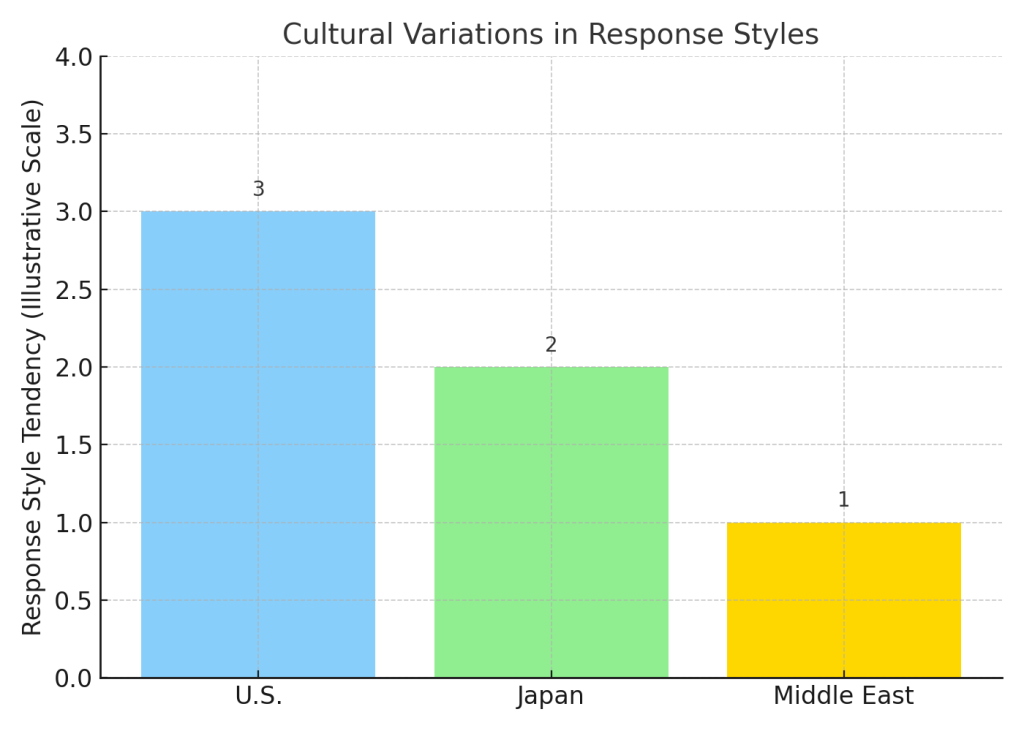
Figure 1: Cultural Variations in Response Styles, Source: Harzing (2006); Chen (2008)
Best Practices for Rigorous Cross-Cultural Research
At Research & Report Consulting, we help researchers and institutions strengthen cross-cultural studies by:
- Conceptual Validation – Ensuring constructs carry cultural relevance before testing.
- Testing Measurement Invariance – Using CFA and multi-group SEM for statistical validation.
- Adapting Instruments – Designing tools responsive to cultural response styles.
- Transparent Reporting – Documenting adaptation, pre-testing, and limitations.
True cross-cultural rigor is about respecting differences while ensuring meaningful comparability.
Final Thought
Cross-cultural research holds enormous potential—but only if it goes beyond words. Translation is a start, not the destination. Valid cross-cultural insights require cultural validation, statistical testing, and contextual awareness.
👉 How do you ensure cultural validity in your research projects? Share your strategies in the comments below!