
Research Visibility in 2026: Top Platforms Every Academic Must Use
In today’s academic ecosystem, publishing alone is not enough. Researchers must actively promote, track, and showcase their work. Visibility directly impacts citations, collaborations, and funding opportunities.
A study by Elsevier (2023) shows that researchers with active digital profiles receive 30–50% more citations than inactive peers.
Therefore, building a strong academic presence across multiple platforms is no longer optional—it is strategic.
Why Research Visibility Matters
Key Benefits
- Increases citation count
- Expands global reach
- Enhances collaboration opportunities
- Improves academic career prospects
- Strengthens research credibility
Supporting Data
- Researchers with ORCID IDs are more discoverable (ORCID Report, 2024)
- Papers shared on ResearchGate show higher engagement rates
- LinkedIn boosts professional networking beyond academia
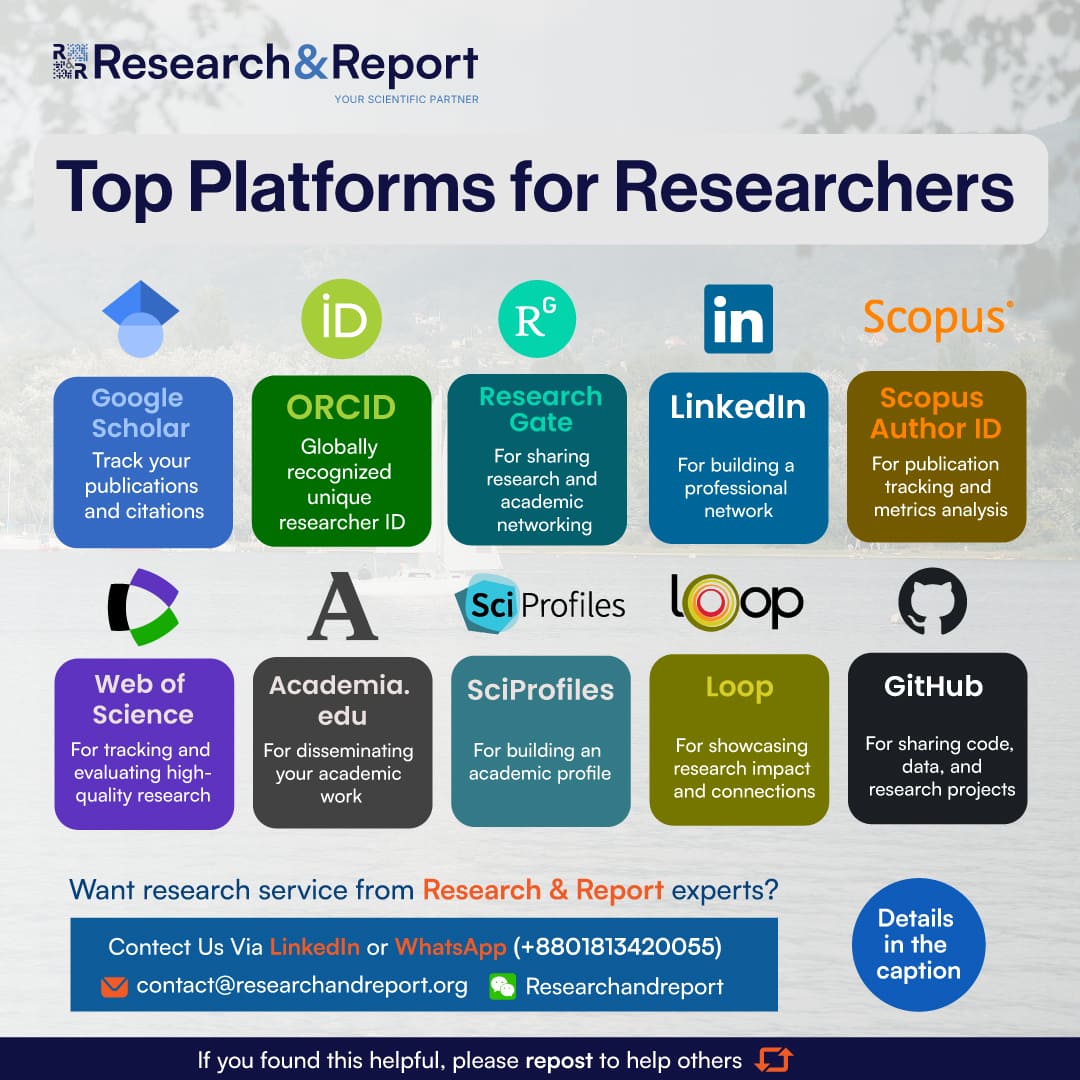
Top 10 Platforms for Academic Visibility
Essential Platforms Explained
1. Google Scholar
- Tracks citations and h-index
- Automatically updates publication records
2. ORCID
- Provides a unique digital researcher ID
- Ensures proper attribution of work
3. ResearchGate
- Enables research sharing and Q&A
- Builds academic collaborations
4. LinkedIn
- Connects researchers with industry professionals
- Supports personal branding
5. Scopus Author ID
- Tracks indexed publications
- Provides citation metrics
6. Web of Science
- Offers high-quality indexing
- Measures research impact
7. Academia.edu
- Shares papers globally
- Increases readership
8. SciProfiles
- Builds structured academic profiles
- Integrates publications
9. Loop (Frontiers)
- Highlights research networks
- Tracks collaborations
10. GitHub
- Shares datasets and code
- Encourages reproducible research
Research Visibility Growth (Infographic)
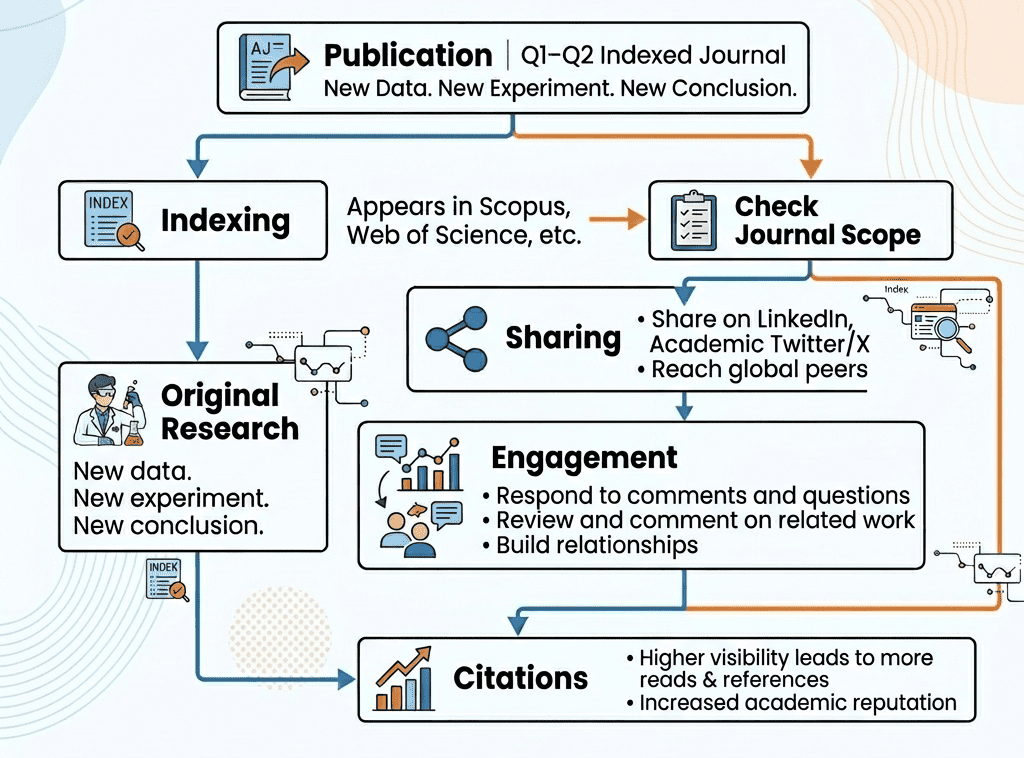
| Activity Level | Avg Citation Increase |
|---|---|
| No Profile | 0% |
| 1–2 Platforms | +15% |
| 3–5 Platforms | +35% |
| 6+ Platforms Active | +50% |
Best Practices for Maximum Visibility
Profile Optimization
- Use consistent name across platforms
- Add keywords in bio and descriptions
- Upload full publication list
Content Strategy
- Share summaries of research papers
- Post regularly on LinkedIn
- Engage in discussions
Technical Optimization
- Link ORCID with Scopus and Web of Science
- Use DOI links for all publications
- Add GitHub repositories for technical work
Common Mistakes to Avoid
- ❌ Incomplete profiles
- ❌ Inconsistent author names
- ❌ Lack of engagement
- ❌ Ignoring SEO for research titles
External Links (All Platforms)
- https://scholar.google.com
- https://orcid.org
- https://www.researchgate.net
- https://www.linkedin.com
- https://www.scopus.com
- https://www.webofscience.com
- https://www.academia.edu
- https://sciprofiles.com
- https://loop.frontiersin.org
- https://github.com
References
- Elsevier Research Report (2023)
https://www.elsevier.com/research-intelligence - ORCID Annual Report (2024)
https://info.orcid.org - Springer Nature Whitepaper
https://www.springernature.com - Google Scholar Metrics Guide
https://scholar.google.com
Looking for expert mentorship and assist for your research paper? Contact us.